Formula Overview
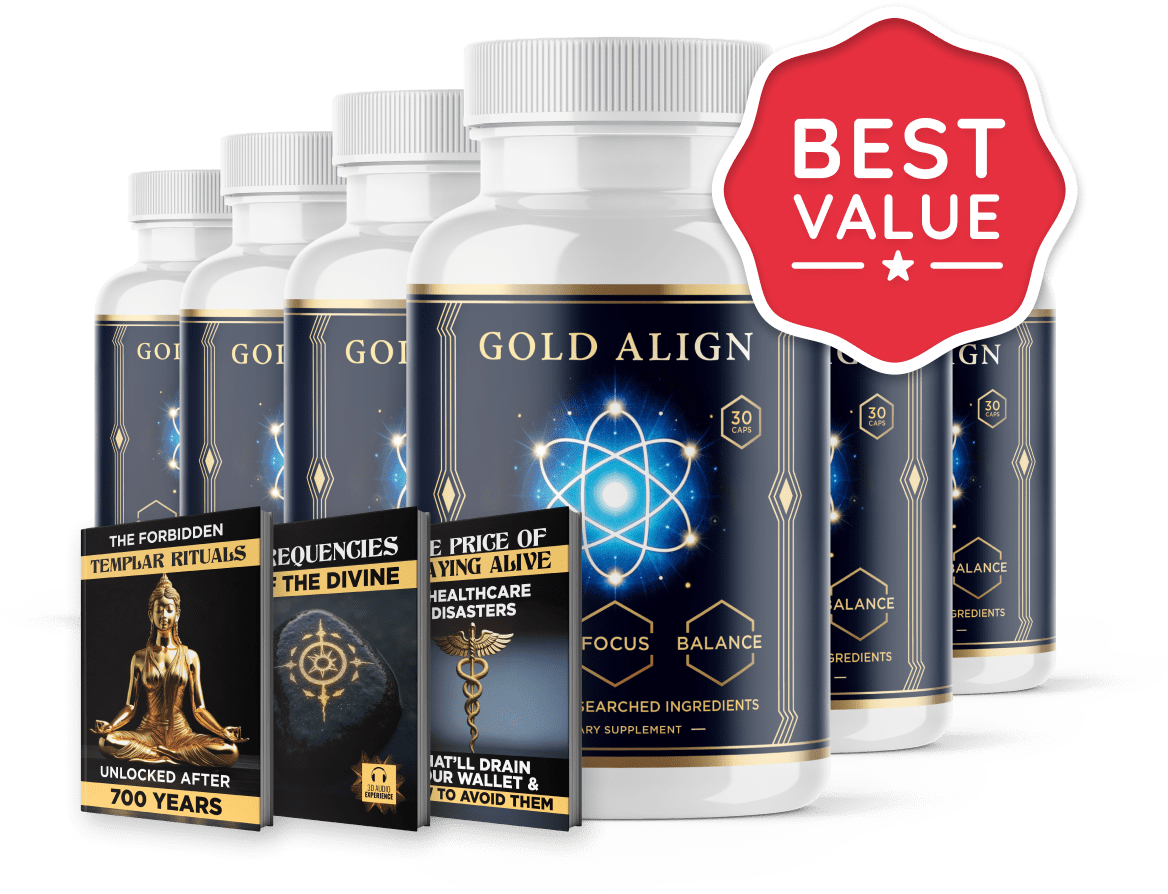
Gold Align brings together a gold-centered ingredient concept and six traditional botanicals in a proprietary blend. The seven card-ready components are Monoatomic Gold (Ormus), Angelica Gigas Root, Solomon's Seal, Goldenseal, Holy Basil, Myrrh, and Sage. The product is positioned as non-GMO, easy to use, and free from stimulants.
The formula page names the ingredients but does not publish a separate amount for each component in the text. That prevents a dose-by-dose comparison with clinical literature. A useful ingredient explanation must therefore distinguish between why an ingredient may have been selected, how it has been used traditionally, and what the complete supplement has actually been shown to do.
1. Monoatomic Gold (Ormus)
Monoatomic Gold and Ormus are listed separately in parts of the product presentation but are commonly combined in Gold Align descriptions. This website treats them as one card to match the supplied seven-image formula set. The ingredient is central to the brand's language around awareness, intuition, and energetic alignment.
Those ideas belong to alternative and traditional wellness narratives. They are not proof that the ingredient changes brain structures, removes mineral deposits, or creates a specific mental or financial outcome. The formula text does not provide a separate dose, chemical specification, or independent finished-product trial that would support those conclusions.
For buyers, the practical point is straightforward: Monoatomic Gold (Ormus) gives Gold Align its distinctive identity, but it should be evaluated as part of a proprietary supplement rather than as established medical therapy.
2. Angelica Gigas Root
Angelica Gigas is an herb used in Korean and broader East Asian traditions. It is often discussed in relation to circulation, vitality, and women's wellness, while Gold Align uses it within a general clarity-and-balance story. Traditional use can help explain formula design, but it does not guarantee the same outcome in a modern capsule.
The root may be relevant to medication and sensitivity questions. People using blood-thinning medicines, hormone-related therapies, or other prescriptions should ask a qualified clinician or pharmacist whether the ingredient fits their situation. The undisclosed individual amount makes that conversation more important, not less.
3. Solomon's Seal
Solomon's Seal is a plant traditionally associated with restoration, joints, connective tissues, and physical ease. In Gold Align, it contributes to the idea that mental focus and whole-body comfort belong in the same wellness routine. It is not presented here as a treatment for pain, injury, arthritis, or any disease.
The product text does not specify the plant part, extraction ratio, standardization, or dose. Shoppers who need that level of detail may prefer a single-ingredient product with a complete specification. Those comfortable with a proprietary blend can view Solomon's Seal as a supporting botanical in the broader formula.
4. Goldenseal
Goldenseal is a North American botanical containing naturally occurring compounds that have received research interest. It is commonly mentioned in traditional digestive and immune contexts. Gold Align uses it as part of a whole-body support approach alongside herbs associated with calm and focus.
This is one of the formula's most important safety-check ingredients. Goldenseal can affect how the body handles certain medications, and broad claims that it “detoxifies” the body oversimplify a complex subject. Do not use Gold Align to replace medical treatment or to manage an infection or digestive condition.
Before use, people taking prescriptions should bring the full ingredient list to a physician or pharmacist. Stop use and seek help if an allergic or otherwise concerning response occurs.
5. Holy Basil
Holy Basil, also known as Tulsi, has a long history in Ayurvedic wellness practices. It is often described as an adaptogenic herb, meaning it is used in traditions focused on resilience and response to everyday demands. That makes it a natural fit for Gold Align's calm-focus positioning.
Ingredient-level studies may explore mood, perceived stress, metabolic measures, or other areas, but their findings depend on the preparation and dose used. They should not be transferred automatically to this proprietary formula. Gold Align does not become a treatment for anxiety or stress disorders simply because Holy Basil appears in the blend.
6. Myrrh
Myrrh is an aromatic resin used historically in cultural, ceremonial, and wellness settings. Its plant compounds have been investigated in laboratory and traditional-use contexts. Within Gold Align, Myrrh supports the formula's themes of balance, ritual, and whole-person wellness.
The product text does not identify a standardized extract or separate amount. That makes claims about exact potency or expected effects inappropriate. People with sensitivities to resins or botanical products should be particularly attentive, and everyone should follow the one-capsule serving rather than assuming a larger amount will work better.
7. Sage
Sage is a familiar culinary and medicinal herb with traditional associations involving memory, attention, digestion, and antioxidant activity. Gold Align uses Sage to round out its mental-clarity profile. Of the seven cards, it may be one of the easiest ingredients for shoppers to recognize.
Recognition still does not establish dose or performance. Research may involve particular Sage species, extracts, or amounts that differ from a proprietary blend. The appropriate claim is that Sage was selected to complement a focus-oriented wellness formula, not that Gold Align prevents decline or restores memory.
What “Proprietary Blend” Means
A proprietary blend lets a manufacturer disclose ingredients without publishing the amount of every component. That can protect a formula concept, but it also limits consumer analysis. Buyers cannot know which ingredient dominates the blend, whether an amount resembles a studied dose, or how one bottle compares with a transparent competitor.
This limitation does not automatically make a supplement poor quality. It changes the decision toward ingredient familiarity, facility claims, ease of use, tolerance, and refund conditions.
Supplement Facts and Quality Questions
The supplied assets include one supplement-facts block, which should appear near the formula or benefits area in the final site. The visual label should remain readable and uncropped. Text on the website should not invent amounts that are not clearly legible on that block.
Gold Align is described as made in the United States in a GMP-certified facility. That is a manufacturing-quality statement, not FDA approval of the supplement. Useful questions include whether the label identifies serving size, other ingredients, allergens, batch information, storage guidance, and a responsible-party address.
Safety Checklist
- Use only the stated serving of one capsule daily with a large glass of water.
- Ask a healthcare professional before use during pregnancy or nursing.
- Discuss Goldenseal and the complete blend when taking medication.
- Consider allergies or sensitivities to herbs, roots, or resins.
- Keep the bottle away from children and store it in a cool, dry place.
- Stop use and seek appropriate care for a concerning reaction.
Ingredient Verdict
Gold Align has a distinctive and clearly named seven-card formula, but its individual doses are not disclosed. The blend makes the most sense for shoppers who value a stimulant-free botanical routine and accept the limits of proprietary dosing. Evidence-focused buyers should avoid turning traditional use or single-ingredient studies into promises about the finished capsule.
Use the formula list as the first buyer check, not the last. Compare it with medications, allergies, goals, and the current package total before deciding whether Gold Align belongs in your daily routine.